Forestry Mulching
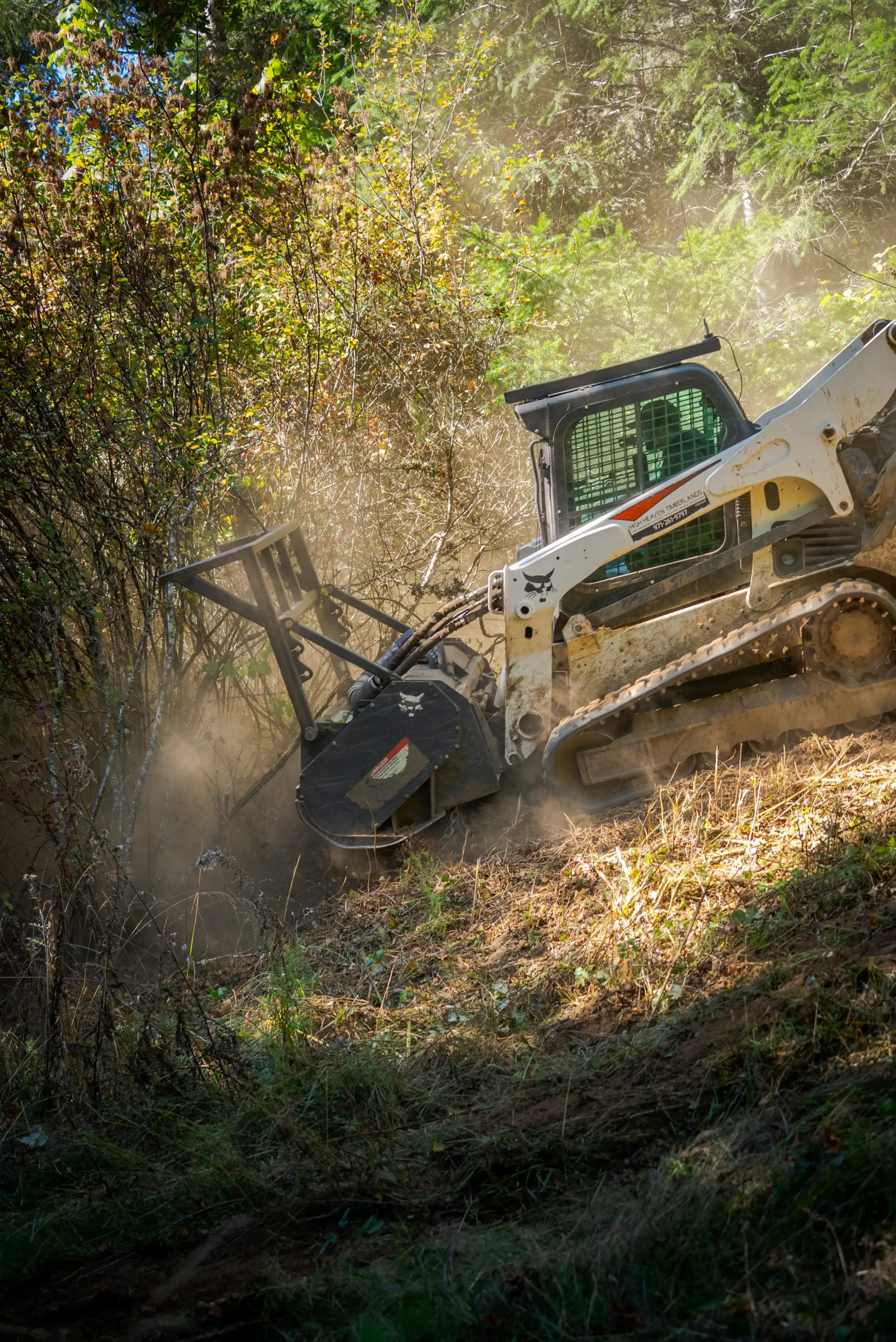
Forestry Mulching Services
Forestry mulching is a practical way to open up overgrown ground without turning the whole property into a construction site. High Heaven Timberlands helps landowners in McMinnville and the surrounding Yamhill County area clear brush, reduce competing growth, improve access, and prepare rural property for the next step.
Every site is different. We look at the vegetation, slope, soil conditions, access, trees you want to keep, and what you plan to do with the land before recommending an approach.
Clear Brush Without Losing Sight of the Property
Blackberry vines, dense brush, small trees, and years of dead growth can make good ground difficult to use. They can hide fences, block roads and trails, crowd young trees, and make it hard to see drainage or terrain problems. Forestry mulching processes suitable vegetation where it stands, reducing it into smaller material that stays on the ground. That can mean fewer truckloads leaving the property and less repeated handling of the same debris.
Depending on the site, forestry mulching can help with:
- Opening access along roads, trails, and fence lines
- Reclaiming overgrown pasture edges and rural acreage
- Removing brush around selected trees
- Preparing an area for planting, construction, or continued management
- Reducing dense surface vegetation and scattered woody debris
A Better View of What Comes Next
Clearing is usually not the final goal. The goal might be better access, healthier timber, a safer work area, a future homesite, or simply land that is manageable again. That is why we plan around what stays as much as what goes. Trees, drainage routes, slopes, wet ground, utilities, and future access all affect how the work should be approached. A good clearing plan makes the next project easier instead of creating a new set of problems.
How Mulching Can Support Forest Health
Dense competing vegetation can take light, water, and growing space from the trees a landowner wants to establish or retain. Selective mulching can reduce that pressure and make it easier to inspect young stands, identify damaged trees, and carry out future forestry work.
Breaking down dead and woody material into smaller pieces also increases its contact with the soil. That material still decomposes over time, but the smaller size can help it break down more readily than intact limbs and tangled brush. The remaining mulch can protect exposed soil from direct rain impact and return organic material to the forest floor as it decomposes.
Mulching is not a one-size-fits-all treatment. Deep material, steep slopes, saturated soils, invasive plants, and fire-sensitive conditions all require judgment. We evaluate the site before deciding what should be mulched, what should be removed, and what should be left alone.
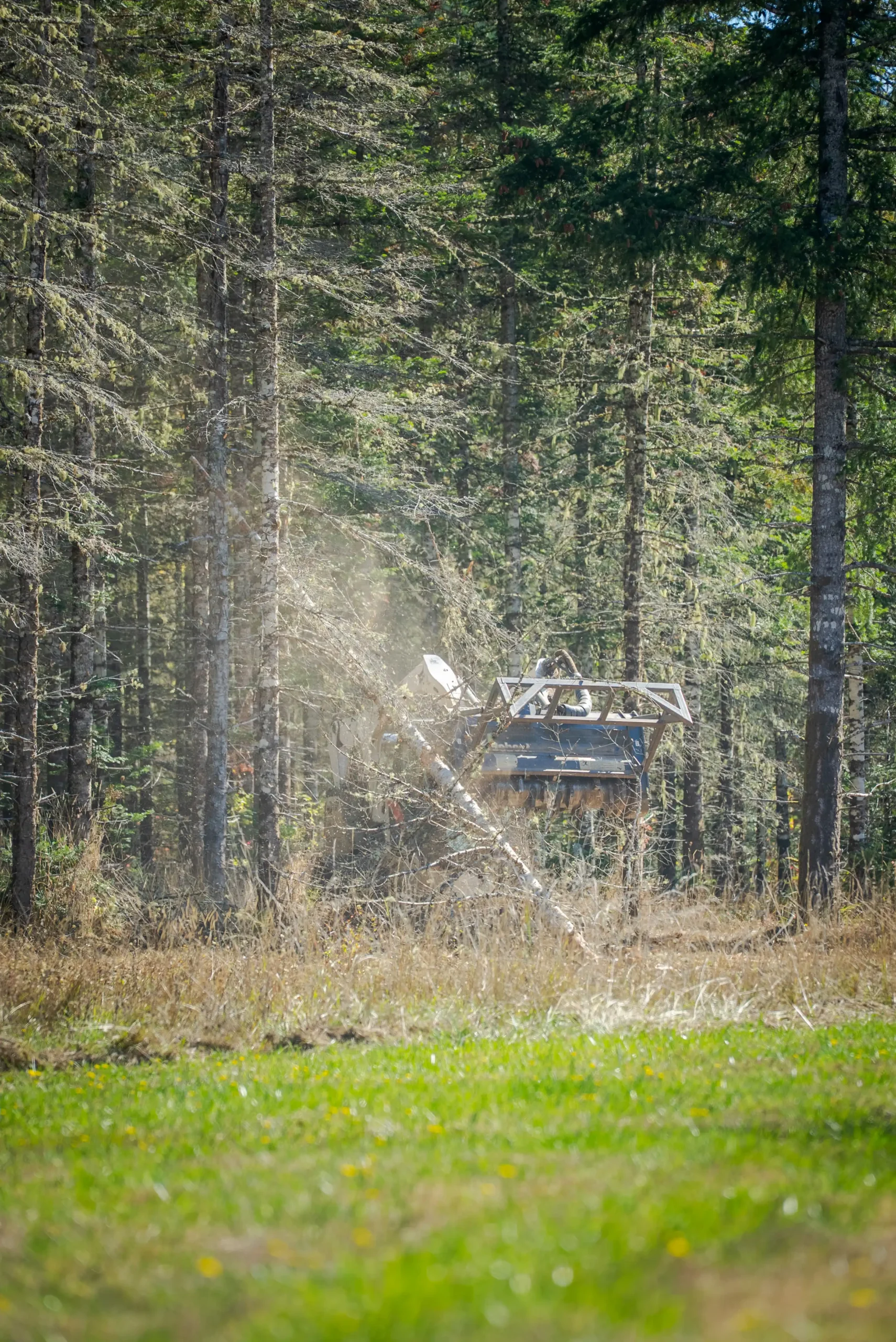
Forestry Mulching for Oregon-Area Properties
Rural properties in Oregon often combine more than one use: timber, pasture, homes, outbuildings, access roads, and undeveloped acreage may all share the same ground. That makes selective planning important.
High Heaven Timberlands works with landowners to define a clear work area and a realistic finish condition. We can also connect mulching with broader land clearing and mulching, forestry and timber management, fire mitigation, or rural development needs.
What to Expect
We start with the property and the objective. During the planning process, we discuss access, material size, terrain, trees or features to protect, and how the area will be used afterward. If another method makes more sense for part of the site, we will say so.
Once the scope is clear, the work can be organized around the property rather than forcing the property to fit a generic clearing plan.
Frequently Asked Questions
Is forestry mulching the same as land clearing?
Forestry mulching is one land-clearing method. It is well suited to many brush, understory, and small-growth conditions, while larger trees, stumps, grading, or heavy excavation may require other equipment or a combined approach.
Will forestry mulching remove every stump and root?
Not necessarily. Mulching generally addresses vegetation above ground and near the surface. If the next use requires stump removal, excavation, or grading, that should be included in the site plan.
Can forestry mulching help prepare a wooded property for future management?
Yes. It can improve access and reduce competing vegetation, which makes it easier to inspect trees and plan later work. The right treatment depends on the stand, soil, slope, and long-term goals.
Talk Through Your Property
Tell us what is overgrown, what you want to keep, and how you want to use the land. We’ll help you identify a practical next step.
Contact Us